When Did Headlights Get This Bright? Should I Be Wearing Night Driving Glasses?
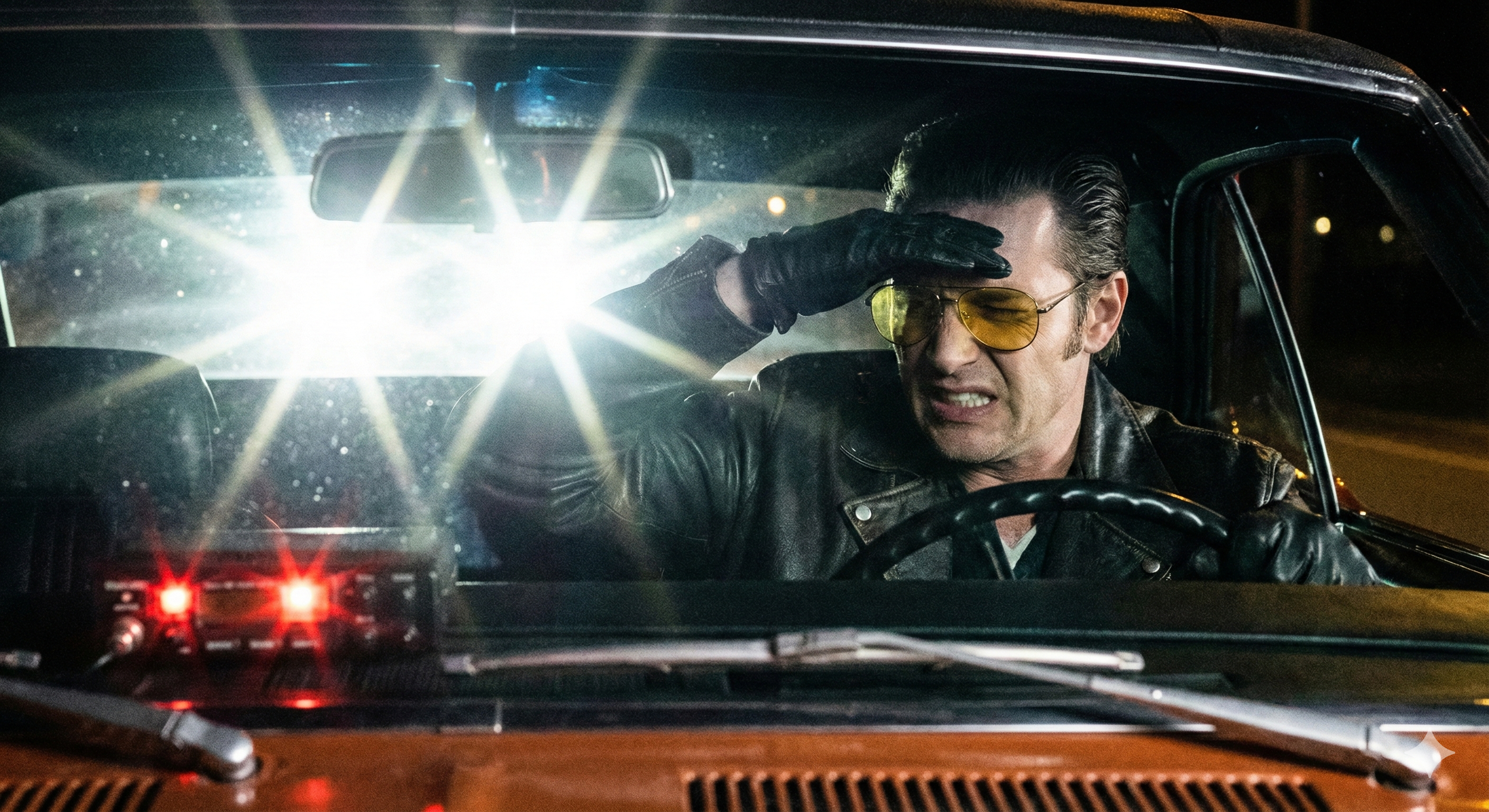
Picture this: you’re driving at night, minding your business, when a car rounds the corner with headlights roughly equivalent to a small supernova. Your pupils panic, your retinas scream, and for a split second you’re basically piloting a two-ton vehicle using echolocation.
It’s no wonder everyone is suddenly asking about “night driving glasses.”
Between LED headlights, HID headlights, and whatever NASA-level beam pattern some trucks are using now, nighttime roads look like a laser light show nobody asked for.
So the question is:
Are these special driving glasses the long-awaited cure for headlight-induced suffering?
Or are they the optical equivalent of those late-night infomercials that promise abs in 7 minutes?
Let’s sort this out with a balance of science and practical reasoning.
Why Night Driving Feels So Terrible Now
Human eyes were not designed for modern headlights. They were designed for “find berries in the daylight” and “don’t fall off a cliff.” They were absolutely not designed for 6,500 K blue-white LEDs screaming directly into your soul.
It wasn’t always like this. Older cars used warm yellowish halogen bulbs, gentle little lanterns compared to today’s industrial laser beams. But over the past decade, styling trends, energy efficiency rules, and LED tech pushed headlights into a new era: sharper, brighter, and bluer.
Modern headlights have two unfortunate features:
They’re brighter than anything in the halogen era.
They contain more short-wavelength (blue-ish) light, which scatters more inside the human eye.
This combination is basically a perfect recipe for glare, halos, and that moment where you question whether humans were ever meant to operate vehicles after sunset.
So yes, more people are asking about driving glasses because more people are getting cooked by modern headlights.
The Great Yellow-Tinted Hope
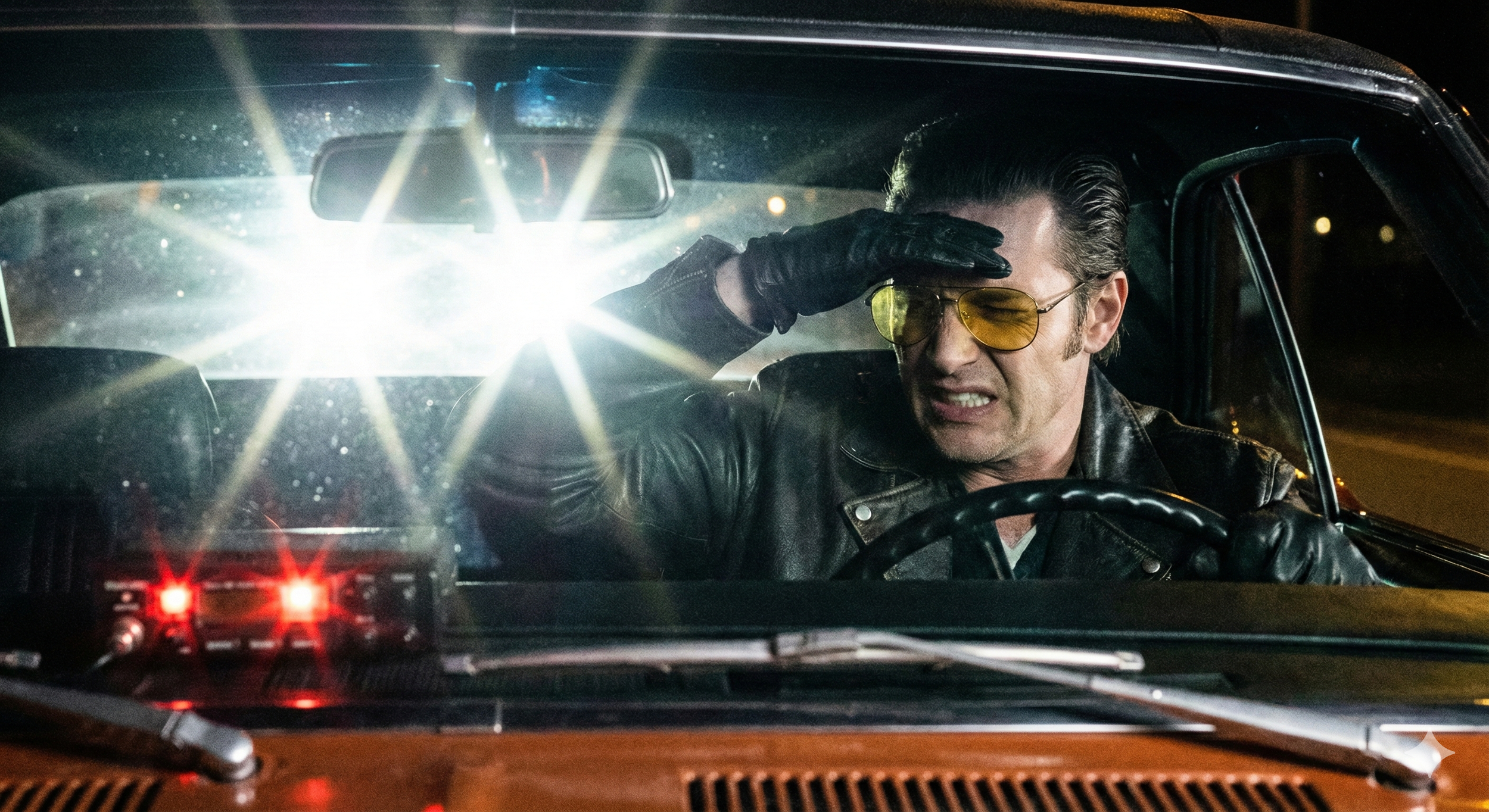
Let’s talk about the classic night-driving glasses: the yellow ones.
They’re everywhere online. They promise “high contrast” and “reduced glare.” They make you look like a 90s action-movie villain. It’s all very exciting.
The scientific problem?
A major peer-reviewed study in JAMA Ophthalmology took these yellow driving glasses and put them through real testing in simulated nighttime driving with actual headlight glare.
The outcome was… anticlimactic.
The glasses did not:
• Help people see pedestrians sooner
• Improve reaction time
• Reduce the impact of glare
• Increase clarity
In fact, because the tint reduces total light, some drivers did slightly worse.
This makes sense. At night, your number one goal is “maximum photons.” Yellow lenses remove photons. Removing photons at night is not helpful. It’s like shading your eyes while trying to read in a dark room.
Premium Driving Lenses: The Plot Twist
Now we get to the fancier stuff: the Zeiss DriveSafe / Hoya EnRoute / Nikon SeeCoat Drive /Essilor Crizal Drive
These are real prescription lenses with:
• Clear optics
• Better anti-reflective coatings
• Slight tweaks to lens design
They’re not yellow. They’re not sunglasses. They don’t make you look like Bono from U2.
So do they work?
Here’s the scientifically responsible answer:
They might improve comfort.
They might reduce reflections off your own lenses.
They might smooth out the visual “harshness” of glare.
But here’s the key point:
There are no independent, peer-reviewed studies showing that these specialty driving lenses improve actual night-driving performance better than a normal prescription lens with a high-quality anti-reflective coating.
If they advertised themselves as “night driving feels slightly less horrible,” I’d be fully on board.
But “improved safety” or “superior visibility”? We need clinical evidence for that. And right now… there isn’t any.
So What Actually Helps?
After seeing hundreds of real patients and digging through research, here’s what reliably improves night driving:
An up-to-date prescription (once your pupils dilate in the dark, little vision errors suddenly stop being little)
A high-quality anti-reflective coating
Clean glasses (you’d be amazed how often this matters)
Clean windshields inside and out
Properly aimed headlights (great for everyone else on the road, even if it won’t fix your glare problems)
Treating early cataracts or dry eye if present
These things will truly help your night driving. Yellow-tinted “night glasses”? Not so much.
The Short Version
Headlights these days are bright, bluish, and seem personally offended that you’re on the road.
This has led to a boom in “night driving glasses.”
Science says:
Yellow-tinted night driving glasses don’t work
Branded “driving lenses” might improve comfort but aren’t proven to improve safety
Clear prescription lenses with good AR coating remain the best evidence-based solution
Until peer-reviewed studies show otherwise, I remain highly skeptical that any driving lens outperforms a normal pair of clear glasses with a good anti-reflective coating.
Dr. Robert Burke is an optometrist at Calgary Vision Centre. The thoughts, opinions, and analogies shared above are intended for education and entertainment purposes only (think of them like a friendly explainer, not a personal consultation.) Every set of eyes is different, and the right testing protocol depends on your specific vision needs, health history, and lifestyle. So if you're experiencing symptoms or just have questions about your vision, don’t rely on internet content alone, talk to your optometrist or health care provider directly. We’re here to help, but nothing beats an in-person exam with someone who knows your eyes.
want to read more?