The People Who See Perfectly May Have Lost the Most
There is a particular type of patient we don’t see very often in an optometry clinic.
They don’t wear glasses.
They don’t wear contact lenses.
They can read the tiny line on the eye chart.
Their eyes feel fine.
And because everything seems to be working perfectly, they quite reasonably conclude:
“Why would I get my eyes checked?”
It’s a fair question. If your teeth felt perfect, you’d still probably go to the dentist. If your blood pressure felt perfect... well, actually, you have absolutely no idea what your blood pressure feels like, which is sort of the point.
Eyes are similar.
We tend to think of an eye exam as something you do when your vision gets blurry. But checking how clearly you can see is only one small part of an eye examination.
And there is one eye disease in particular that takes full advantage of this misunderstanding.
Glaucoma.
Glaucoma has a very inconvenient business model
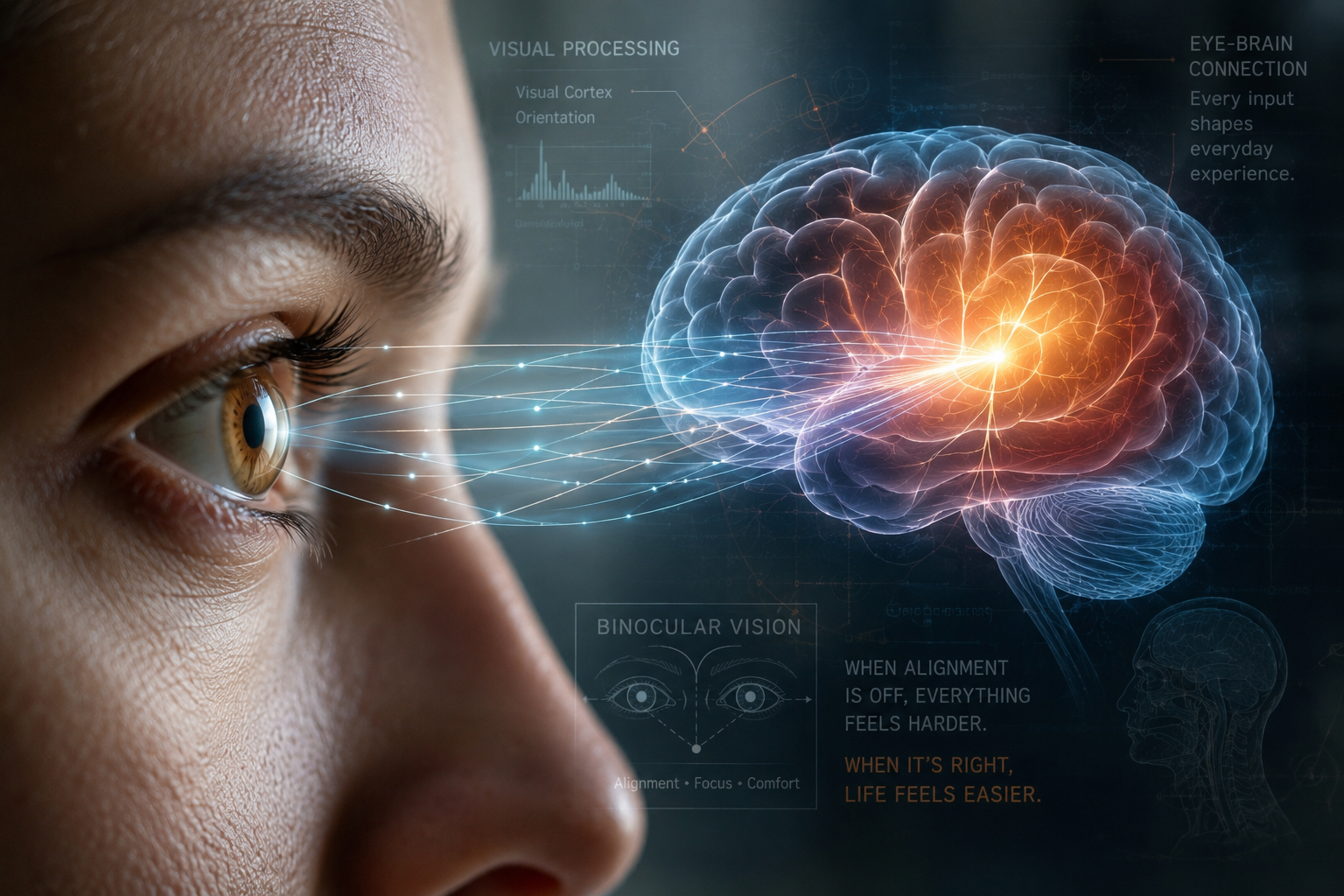
Glaucoma damages the optic nerve, the cable carrying visual information from your eye to your brain.
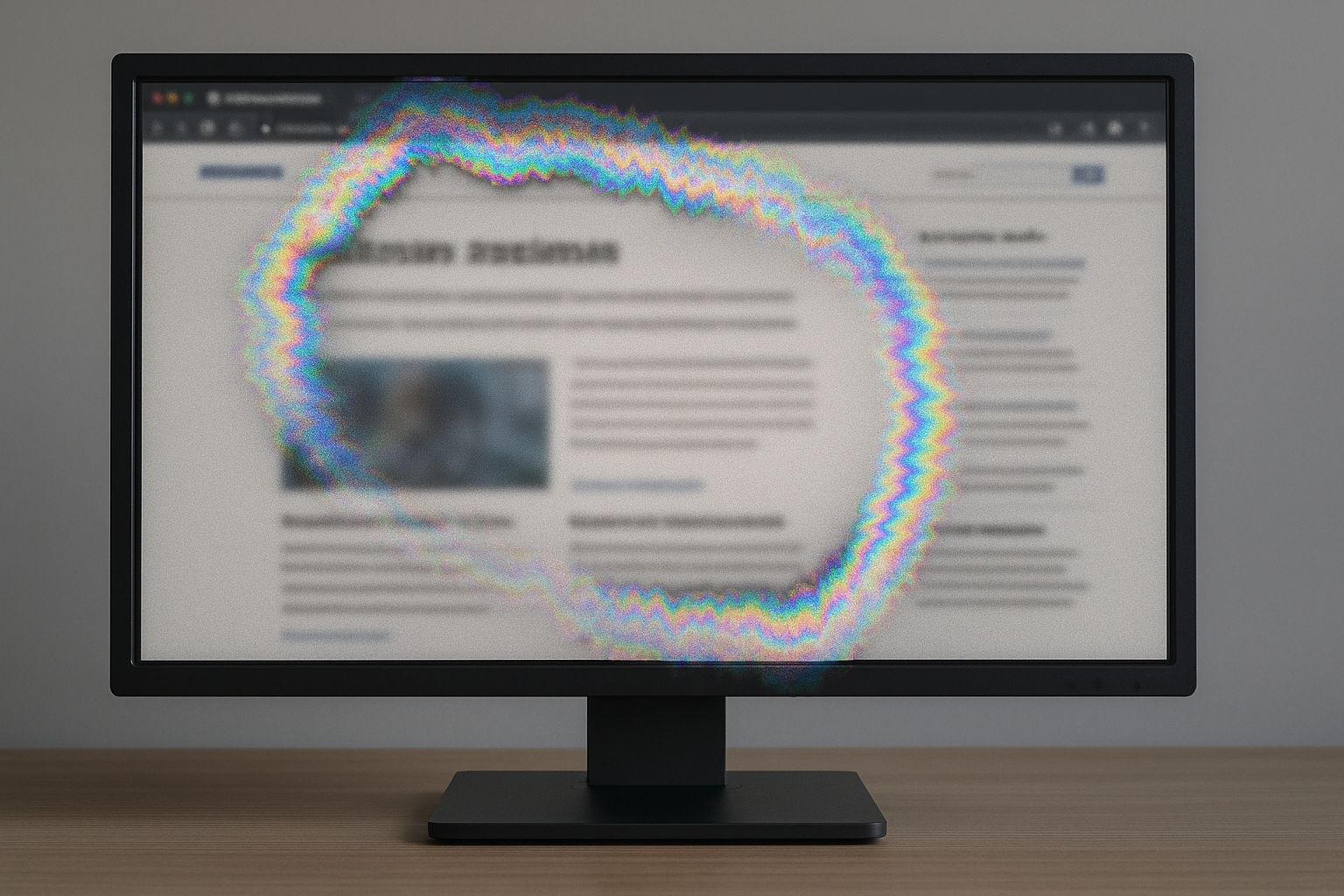
The problem is that early glaucoma generally doesn’t make things blurry. It doesn’t usually hurt. It doesn’t make your eyes red. And it doesn’t necessarily affect the central vision you use to read an eye chart.
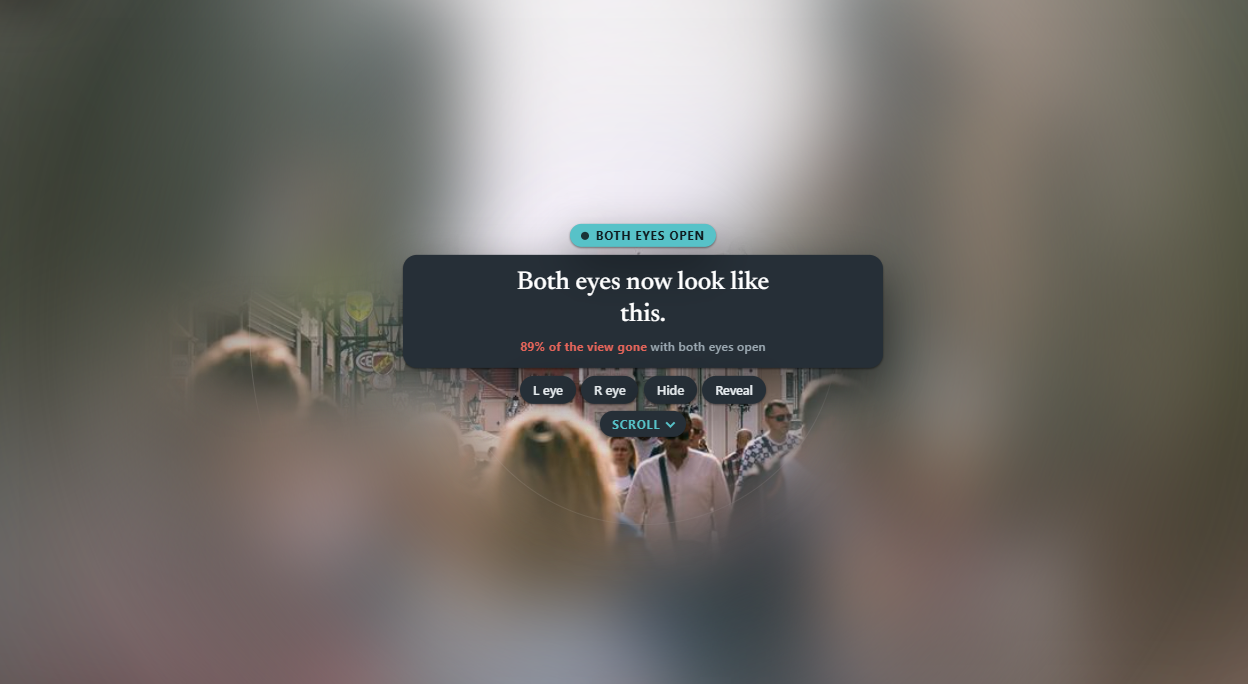
Instead, the disease can slowly damage areas of your visual field while your everyday vision seems completely normal.
Your brain, being the relentlessly helpful organ that it is, makes this even worse by doing a remarkably good job of filling in missing information.
So you don’t usually experience early glaucoma as:
“Hmm. It appears I have lost 17% of my peripheral visual field.”
You experience it as:
Nothing.
And that creates an interesting paradox.
The person whose vision has always been excellent may have less reason to visit an optometrist. But that also means fewer opportunities for someone to notice an abnormal optic nerve, suspicious eye pressure, thinning nerve tissue or a developing visual-field defect.
I wondered whether there was actually evidence for this, or whether it was simply something eye doctors like to tell people who haven’t been examined since the first Obama administration.
Turns out, there is some pretty compelling evidence.
First, an important distinction
Not getting eye exams does not appear to cause glaucoma.
There is no evidence that your optic nerve somehow knows you skipped your appointment and decides to punish you.
The issue is detection.
The research supports a chain that looks something like this:
No regular eye exams → glaucoma develops unnoticed → more optic nerve damage accumulates → glaucoma is eventually discovered at a more advanced stage → less healthy vision remains to protect over the rest of your life.
And unlike blur caused by needing glasses, glaucomatous vision loss is irreversible.
Once those nerve fibres are gone, we currently cannot bring them back.
So with glaucoma, when you discover the disease matters.
The longer people go without an exam, the worse things seem to get
One particularly interesting British study looked at 220 people who had just been diagnosed with glaucoma.
Researchers compared patients arriving with relatively early disease against those already showing advanced visual-field loss.
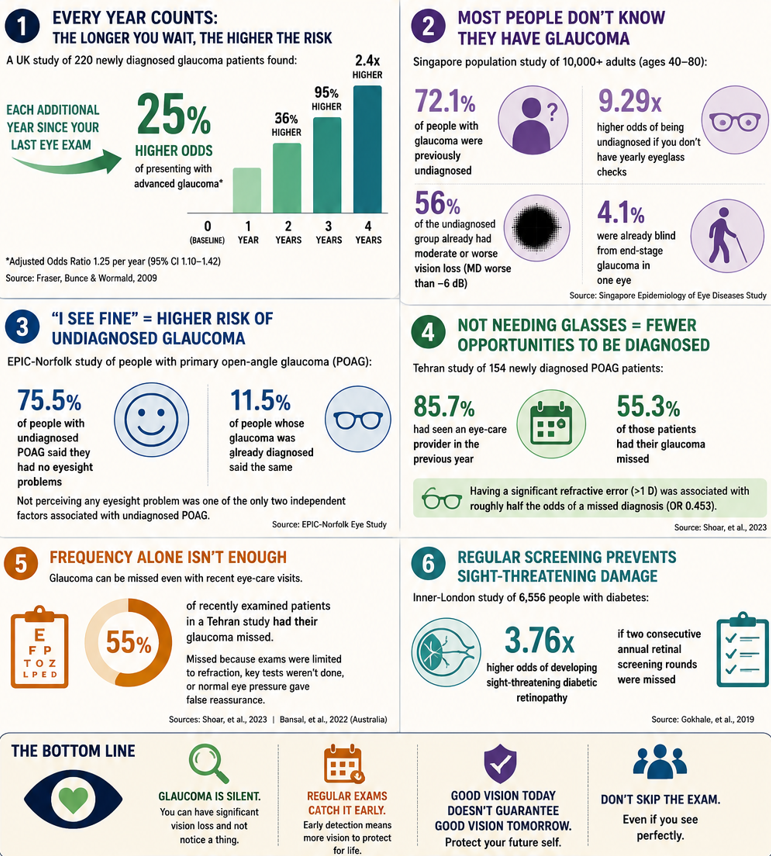
For every additional year since the patient's last optometrist visit, the adjusted odds of presenting with advanced glaucoma increased by about 25%.
That is a remarkably tidy relationship.
It doesn’t prove that skipping an exam directly caused the additional damage. This was an observational study, and people who regularly visit optometrists can differ from people who don’t in plenty of other ways.
But it fits exactly what we would expect from a slowly progressive disease that usually produces few early symptoms.
If nobody looks for it, it gets more time to quietly do its thing.
Then researchers went looking for glaucoma in people who didn't know they had it
A large Singapore study examined more than 10,000 adults between 40 and 80 years old.
Instead of only studying people already attending glaucoma clinics, researchers examined the population and actively looked for glaucoma.
Among the people they found who had glaucoma, 72% had not previously been diagnosed.
More strikingly, people who did not have yearly eyeglass checks had more than nine times the adjusted odds of having their glaucoma remain undiagnosed.
And these weren’t necessarily microscopic cases that had just begun.
More than half of the undiagnosed patients already had at least moderate visual-field loss. Some already had end-stage glaucoma causing blindness in one eye.
In other words, people can walk around with meaningful glaucoma damage while remaining completely unaware that anything is wrong.
Which brings us back to our person with “perfect vision.”
“But I can see perfectly”
This may actually be the most interesting part.
Researchers in the EPIC-Norfolk Eye Study examined people with primary open-angle glaucoma and compared those who already knew they had glaucoma with those whose glaucoma was discovered through the study.
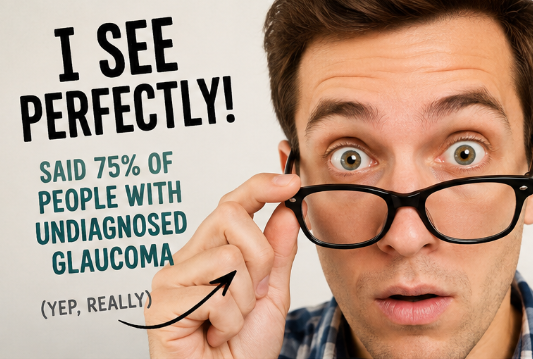
Among the people walking around with undiagnosed glaucoma, 75.5% said they had no problems with their eyesight.
Among people whose glaucoma had previously been diagnosed, only 11.5% said the same thing.
After researchers accounted for numerous other variables, not perceiving any problem with eyesight remained independently associated with having undiagnosed glaucoma.
That is the part worth remembering.
Good vision does not necessarily mean healthy eyes.
Sometimes it simply means an eye disease hasn't affected the part of vision you notice yet.
Are people who don't need glasses especially vulnerable?
This was my original question, and the answer is interesting.
We cannot say that people who don't need glasses are biologically more likely to develop glaucoma simply because they have good eyesight.
What the evidence suggests is subtler.
Glasses create a reason to interact with eye care.
If you are nearsighted, you need new glasses occasionally. Your prescription changes. Your reading glasses stop doing the job. Your contact lenses need renewing.
Each of those annoyances brings you back into an examination room.
And every visit creates another opportunity to discover something completely unrelated to your glasses.
One study of newly diagnosed glaucoma patients found that having a significant glasses prescription was associated with roughly half the odds of glaucoma having been missed. Updating distance or reading glasses was also the most common reason these patients had sought eye care.
That doesn't prove that glasses protect you from glaucoma.
They obviously don't.
But needing glasses may accidentally protect some people from having glaucoma remain undetected because it keeps bringing them back to someone who can look at their optic nerves.
The Singapore research supports the same basic idea. Simply wearing glasses wasn't independently protective. Neither was being nearsighted. What stood out was actually having regular eye checks.
So the real dividing line probably isn't:
Glasses vs. no glasses.
It's closer to:
People whose eyes get examined vs. people whose eyes don't.
An eye exam isn't a glasses exam
This is probably where the misunderstanding starts.
The familiar part of an eye exam is:
“Which is better, one... or two?”
That determines your prescription.
But while you're deciding whether two nearly identical blurry images are somehow different, we're also interested in something much more important: the health of the eye itself.
Depending on the patient and their risk factors, that can include examining the optic nerve and retina, measuring eye pressure, assessing the drainage angle, evaluating the retinal nerve fibre layer and, when indicated, performing OCT imaging or visual-field testing.
That distinction matters because simply showing up for a refraction isn't necessarily enough.
Studies have found glaucoma that remained undiagnosed even in people who had recently seen an eye-care provider. In one study, more than half of recently examined patients who were subsequently diagnosed with glaucoma had had their disease missed.
So the goal isn't merely to sit in a chair once every few years and read some letters.
The goal is a proper assessment of ocular health.
Why finding glaucoma earlier matters
Imagine starting a cross-country road trip.
Patient A begins with a full tank of gas.
Patient B discovers someone siphoned off three quarters of the tank overnight.
Both can start driving. Both may look completely normal sitting in the parking lot.
But Patient B has considerably less room for things to go wrong.
Glaucoma works somewhat like that.
Treatment can often slow or prevent further damage. What it cannot currently do is replace the optic nerve tissue already lost before diagnosis.
Long-term glaucoma studies show that the amount of visual-field damage present when glaucoma is first diagnosed is an important predictor of the risk of eventually becoming blind.
This is why two people with the same disease can have very different futures.
One person discovers mild glaucoma during a routine examination, begins treatment and may maintain useful vision for the rest of their life.
Another person waits until something finally seems wrong.
They may arrive at the same diagnosis, but they're starting the race much farther behind.
Glaucoma isn't the only disease that behaves this way
Diabetic retinopathy provides an even clearer example.
People with diabetes can develop significant retinal disease before noticing changes in vision, which is why regular retinal screening exists.
In a study following more than 6,500 people with diabetes, those who missed two consecutive annual retinal screenings had 3.76 times the adjusted odds of subsequently being found with sight-threatening diabetic retinopathy compared with people who attended annually.
The evidence isn't equally strong for every eye disease, and it would be misleading to claim that routine examinations prevent all forms of vision loss.
But glaucoma and diabetic retinopathy share an important characteristic:
The disease can be doing something important before your vision tells you about it.
So who should be thinking about this?
Glaucoma risk isn't evenly distributed.
Age matters. Family history matters. Eye pressure matters. Ancestry, refractive error and certain medical and ocular conditions can matter. Access to eye care matters too.
And interestingly, having a family history can work in two directions.
It increases your biological risk of glaucoma, but research suggests people who know glaucoma runs in their family may actually be less likely to present with advanced disease, presumably because they're more likely to get checked.
Knowing you're at risk can be protective.
Thinking you're not at risk because you see well is the more dangerous assumption.
The advantage of having bad eyesight
So here is the strange conclusion.
The person who has worn glasses since Grade 4 may have one small advantage over the person proudly announcing that they can still read the bottom line of the chart.
They have a reason to keep getting their eyes examined.
Every couple of years, their annoying little prescription problem brings them back through the door, and while they're there, somebody gets another opportunity to make sure everything else is behaving itself.
The person with naturally excellent vision doesn't get that reminder.
Nothing gets blurry.
Nothing hurts.
Nothing forces an appointment.
And glaucoma is perfectly happy with this arrangement.
So if you've always had excellent vision, that's great.
Enjoy it.
Just don't confuse seeing well with having healthy eyes.
Because sometimes the most important finding in an eye examination has absolutely nothing to do with whether you need glasses.
Dr. Robert Burke is an optometrist at Calgary Vision Centre. The thoughts, opinions, and analogies shared above are intended for education and entertainment purposes only (think of them like a friendly explainer, not a personal consultation.) Every set of eyes is different, and the right testing protocol depends on your specific vision needs, health history, and lifestyle. So if you're experiencing symptoms or just have questions about your vision, don’t rely on internet content alone, talk to your optometrist or health care provider directly. We’re here to help, but nothing beats an in-person exam with someone who knows your eyes.
want to read more?